From Bali to Your Body: How Traditional Indonesian Dance Is Quietly Reshaping American Wellness
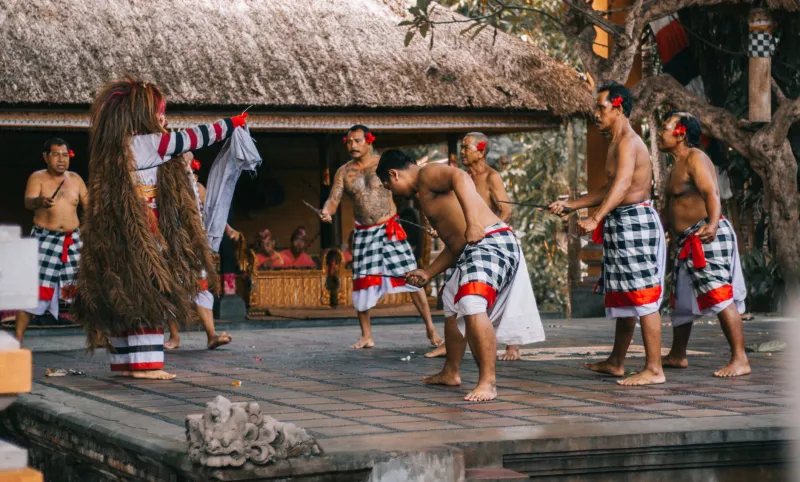
Somewhere between a Zumba class and a meditation retreat, something unexpected is happening in American wellness culture. People are showing up to community centers in Seattle, dance therapy studios in Atlanta, and yoga spaces in Chicago — and they're learning to move in ways that trace back thousands of years to the islands of Indonesia.
It's not a viral moment (yet). But instructors, therapists, and students across the country are quietly building something real around traditional Indonesian movement practices. And those who've discovered it say it's unlike anything else they've tried.
What's Actually Being Taught
The forms showing up most often in American spaces are varied but connected. Poco-Poco, originally from North Maluku, is an upbeat, line-dance-style movement that's as social as it is physical — think line dancing with a distinctly Indonesian rhythm. It's been popular in community fitness settings in Southeast Asia for years, and it's starting to find a foothold in diaspora communities across the U.S.
Tari Pendet, the Balinese welcome dance, is slower and more intentional. It involves precise hand gestures, eye movements, and footwork that demand real presence. Practitioners describe it almost like moving meditation — impossible to do while mentally drafting your grocery list.
Then there's Legong, one of the most technically demanding classical Balinese dance forms, traditionally performed by young girls but increasingly taught to adults of all backgrounds. The intricate finger positions alone take months to learn. But instructors say that's partly the point.
"When you're focused on where your pinky finger is, you cannot be anxious about your email inbox," says Maya Kusuma, a Balinese-American dance instructor who teaches in the Bay Area. "That's not an accident. These dances were always designed to bring you fully into your body."
Why Americans Are Showing Up
The timing makes a certain kind of sense. After years of high-intensity fitness culture — the kind that treats the body as something to be optimized and pushed to its limits — a lot of Americans are burned out. Wellness culture has been pivoting toward slower, more intentional practices: breathwork, sound baths, somatic therapy. Indonesian dance fits naturally into that shift.
But there's something more specific happening too. People are increasingly drawn to practices that carry cultural weight — that come from somewhere, that mean something beyond just burning calories.
"I think people are hungry for movement that has a story," says Dr. Alicia Torres, a licensed dance/movement therapist based in Denver who has incorporated Tari Pendet elements into her clinical work. "When you learn that a gesture in Pendet represents an offering, or that a particular eye movement is meant to express devotion — it changes how you inhabit your own body. It becomes an act of meaning-making, not just exercise."
Torres started exploring Indonesian dance after a colleague introduced her to it at a wellness conference. She was struck by how much the movement vocabulary overlapped with concepts she already used in therapy — groundedness, presence, the relationship between gesture and emotion.
The Physical Case Is Real Too
It would be easy to frame this entirely as a spiritual or mental health story, but the physical benefits are worth taking seriously on their own terms.
Poco-Poco, for example, has been studied in Indonesia as a cardiovascular workout. Its rhythmic, full-body engagement — arms, hips, footwork all coordinated — makes it genuinely aerobic without the impact stress of running. For older adults or people managing joint issues, that's not a small thing.
Legong and Pendet work different muscles entirely. The sustained low stances build serious leg strength. The constant micro-adjustments in posture improve balance in ways that translate to everyday life. And the hand and eye coordination involved in classical Balinese forms has been linked, anecdotally, to improved focus and fine motor control.
"I had a student who came to me after a wrist injury," says Kusuma. "Her physical therapist had cleared her to return to light activity, and she was looking for something gentle but engaging. Six months into learning Pendet, she told me her hand strength was better than before the injury. I wasn't surprised."
The Cultural Dimension Can't Be Separated
Here's where it gets interesting — and where some Indonesian-American instructors are asking the wellness industry to slow down a little.
These dances aren't culturally neutral movement systems. They're embedded in specific traditions, spiritual contexts, and community histories. Tari Pendet is a sacred Balinese offering dance. Legong has roots in royal courts. Poco-Poco carries the energy of collective celebration. Teaching them well means teaching that context.
Kusuma is direct about this: "I'm not offering 'Bali-inspired movement.' I'm teaching Balinese dance. There's a difference. And I think that distinction actually serves my students better — because when they understand where it comes from, it lands differently in their bodies."
Several instructors in the space have developed curricula that weave cultural education into every class — sharing the history of a movement, the island or community it comes from, the occasion it was originally performed for. Far from making it inaccessible, students say this context is often what draws them deeper in.
"I came for the wellness angle," admits Priya Mehta, a 34-year-old marketing consultant in Portland who started taking Poco-Poco classes at a local community center. "But I stayed because I kept wanting to know more. I've gone down so many rabbit holes learning about Indonesian culture. It kind of opened a door."
Where to Find It
Right now, the easiest way into Indonesian dance in the U.S. is through diaspora community organizations. Many Indonesian cultural associations in cities like Los Angeles, Houston, New York, and the Bay Area offer regular classes or workshops. Some YMCA branches and community centers in areas with larger Indonesian-American populations have started incorporating Poco-Poco into their group fitness schedules.
For those outside major metro areas, online learning has become a real option. Instructors like Kusuma have developed video course libraries, and YouTube has a surprisingly robust collection of instructional content from both Indonesian and Indonesian-American teachers.
Dance therapy contexts are still emerging, but practitioners like Dr. Torres are publishing their work and training other therapists. Expect this to grow.
The Bigger Picture
American wellness culture has a long history of borrowing from non-Western traditions — yoga from India, tai chi from China, capoeira from Brazil. Indonesian movement practices are entering that conversation now, and the instructors leading the way seem clear-eyed about both the opportunity and the responsibility involved.
Done well, this isn't appropriation. It's an invitation — into a culture, a history, and a different relationship with your own body. And if a few more Americans end up with stronger legs, calmer minds, and a genuine curiosity about Indonesian culture? That feels like a pretty good outcome for everyone.