Why Bahasa Indonesia Is Suddenly the Hottest Language on American Campuses
Photo: Godot13, CC BY-SA 4.0, via Wikimedia Commons
The Language Nobody Expected to Blow Up
Walk through the language department hallways at the University of Wisconsin-Madison or Cornell University on any given Tuesday, and you might catch something that would have seemed unlikely a decade ago: a packed classroom full of undergrads conjugating Indonesian verbs. Not Spanish. Not Mandarin. Indonesian.
Something is shifting in American higher education, and it's happening quietly enough that most people outside academia haven't noticed yet. Bahasa Indonesia — the official national language of a country with 270 million people and the world's fourth-largest population — is having a genuine moment on US campuses. Universities are scrambling to expand programs, recruit qualified instructors, and build out Southeast Asian studies infrastructure to meet demand that's growing faster than anyone budgeted for.
So what's actually driving this? The answer is messier and more interesting than a single headline can capture.
The Career Angle Is Real
Talk to students enrolled in Indonesian language courses and one theme comes up almost immediately: opportunity. Southeast Asia, and Indonesia in particular, has emerged as a serious economic player that American companies can no longer afford to ignore. Indonesia's GDP has been climbing steadily, its tech sector is booming, and US firms in everything from agriculture to fintech are deepening their footprint across the archipelago.
For students thinking practically about their futures, learning Bahasa Indonesia is starting to look like a smart career hedge. Unlike Mandarin or Arabic — languages with enormous speaker bases but also enormous competition among learners — Indonesian is still relatively rare among English-speaking Americans. That scarcity has real value in the job market.
"I had three different internship recruiters specifically ask me about Southeast Asian language skills in the same month," said one junior at Ohio State University who asked to remain anonymous because she hadn't told her parents she'd swapped her French minor for Indonesian. "I figured I'd rather be the only person in the room who speaks it than the hundredth person who speaks something else."
That logic is resonating across campuses, and department heads are noticing.
Universities Are Playing Catch-Up
Here's the awkward reality: American universities were not prepared for this. Most Indonesian language programs have historically operated on shoestring budgets, staffed by one or two instructors handling everything from introductory conversation to advanced literature. When enrollment numbers started climbing, departments found themselves stretched thin almost overnight.
The push to hire qualified Bahasa Indonesia instructors has become genuinely competitive. Experienced teachers with the right combination of linguistic credentials and cultural fluency are in short supply, and universities are actively recruiting from diaspora communities, partnering with Indonesian cultural organizations, and in some cases reaching out directly to institutions in Jakarta and Yogyakarta to build exchange pipelines.
Several schools have also started rethinking how Indonesian fits into their broader Southeast Asian studies offerings. Rather than treating the language as a standalone elective, more programs are integrating it into interdisciplinary tracks that connect language learning with coursework in regional politics, history, and economics. It's a smarter approach, and it's helping students see Bahasa Indonesia as a genuine area of expertise rather than just a checkbox.
The Cultural Pull Is Just as Strong as the Career Pull
Not every student arriving at an Indonesian language class is thinking about their LinkedIn profile. A significant and growing number are showing up because they're genuinely curious — about the culture, the food, the music, the art, the sheer scale and diversity of a country that most Americans couldn't accurately locate on a map five years ago.
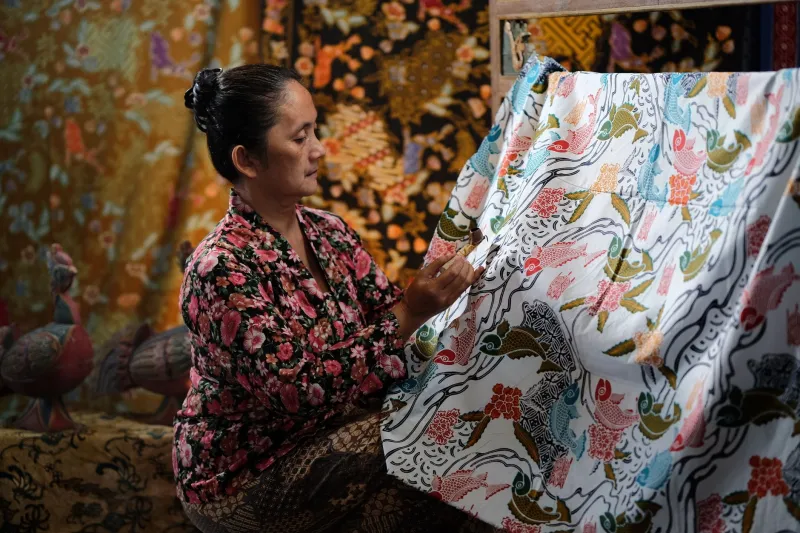
Indonesian pop culture has been quietly seeping into American consciousness through multiple channels simultaneously. The martial art of Pencak Silat has gained traction in gyms across the country. Batik fabric has found its way onto fashion runways. Wayang kulit shadow puppet performances are drawing crowds at arts festivals from Austin to Portland. Indonesian restaurants in cities like Houston, Los Angeles, and Chicago are building devoted local followings.
For students with Indonesian heritage, the surge in language programs carries a different kind of emotional weight. Many grew up in households where Indonesian was spoken at home but never validated in any formal educational setting. Seeing their parents' language offered as a serious academic subject — with real instructors, real textbooks, and real institutional support — hits differently.
"My mom cried when I told her I was taking Indonesian at school," said a second-generation student at the University of Michigan. "She grew up thinking that language was something you kept at home, not something that belonged in a classroom. That's changing."
What This Moment Actually Means
Zoom out far enough and the Indonesian language boom starts to look like a symptom of something larger happening in American global education. For decades, the conventional wisdom was that students should focus on languages tied to existing economic powerhouses — China, Germany, Japan. Southeast Asia, despite being home to hundreds of millions of people and some of the world's fastest-growing economies, got treated as an afterthought.
That assumption is crumbling. A new generation of students, educators, and policymakers is waking up to the fact that the next few decades of global economic and political life will be shaped significantly by what happens in Southeast Asia. Indonesia, as the region's largest country and a functioning democracy with enormous natural resources and a massive young population, sits right at the center of that story.
For American universities, getting ahead of that curve means building language infrastructure now — hiring teachers, developing curricula, and creating pathways for students to develop genuine expertise. The ones moving fastest are already seeing the payoff in enrollment numbers and graduate placement outcomes.
The language that once filled a single small classroom is starting to fill lecture halls. And if the trend lines hold, the scramble to hire Bahasa Indonesia teachers is only going to get more intense from here.