Sitting Still Together: How the Indonesian Practice of Duduk Is Quietly Dismantling America's Hustle Obsession
Nobody's Optimizing Anything Here
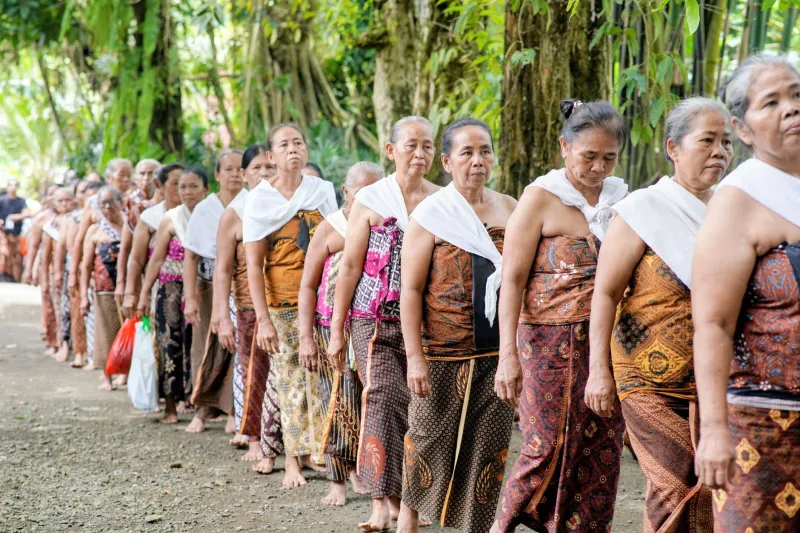
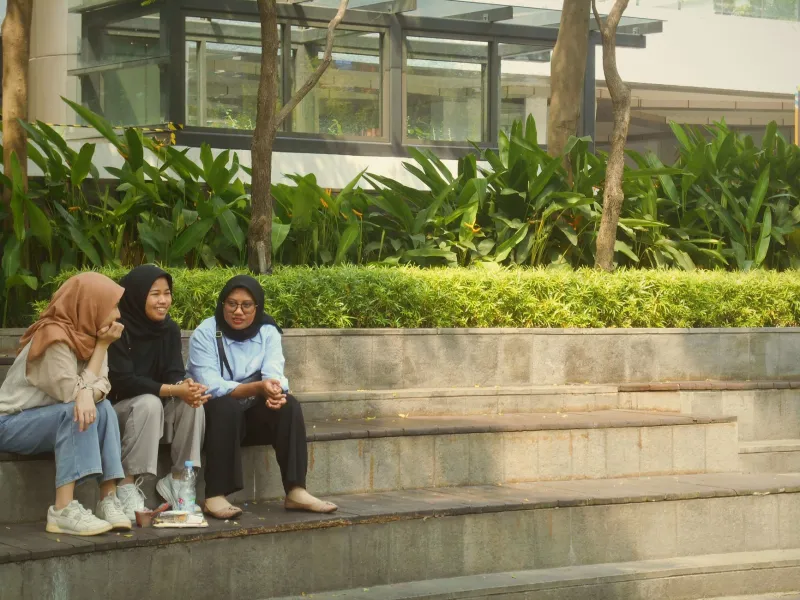
There's a particular kind of afternoon in Pamekasan — the kind where the heat flattens everything out and two people end up on a porch, not really talking, not really doing anything, just... sitting. Together. It has a name: duduk. Literally translated, it just means "to sit." But anyone who's grown up in a Madurese or broader Indonesian household will tell you it means something a lot more layered than that.
It means being present without an agenda. It means companionship that doesn't require performance. It means time that isn't trying to become anything else.
In the United States in 2025, that concept sounds almost subversive.
The Productivity Trap Americans Can't Quit
American culture has a complicated, codependent relationship with busyness. Calendars get packed like carry-on luggage. Downtime gets rebranded as "recovery" so it can still feel productive. Even rest has a PR problem — we call it "sleep optimization" and track it with wearables.
The wellness industry didn't fix this. If anything, it made it worse. Meditation apps gamified stillness. Journaling became a content category. Self-care turned into a to-do list with better aesthetics.
"There's always a point to American relaxation," says Dian Kusuma, a community organizer in Chicago whose family is originally from East Java. "You're meditating to reduce cortisol. You're taking a bath to reset your nervous system. Even doing nothing has to be productive somehow. Duduk doesn't work like that. It doesn't have a destination."
That distinction matters more than it might seem.
What Duduk Actually Is (And Isn't)
Duduk isn't meditation. It isn't silence as a spiritual discipline. It isn't even particularly quiet, a lot of the time — someone might be playing music softly in the background, or a TV hums from another room, or there's the ambient noise of a neighborhood going about its business.
What makes it distinct is the togetherness without demand. You're not expected to be entertaining. You're not expected to be productive. You're not even expected to be particularly engaged. You're just expected to be there — and that presence is, in itself, the whole point.
"My lola used to sit with the neighbors every evening," says Rizky Hartono, a graphic designer in Austin whose family emigrated from Madura in the early 2000s. "Nobody was really talking about anything important. They'd comment on who walked by, maybe share something they cooked. But mostly they were just together. I didn't understand the value of that until I moved to Texas and had no version of it in my life."
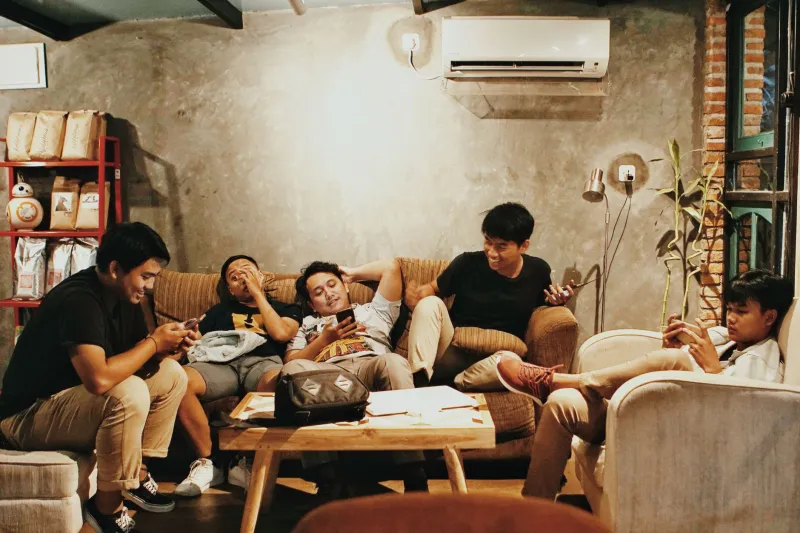
Rizky started recreating something like it with friends — a standing Wednesday evening hang where phones stay mostly in pockets and nobody has to have a reason for showing up. "I didn't call it duduk at first. I just knew I needed it."
Gen Z Found the Word for What They Were Missing
Here's the interesting thing: a lot of younger Indonesian-Americans are coming to duduk not through their families, but through a growing sense that something is broken in how they've been taught to spend time.
Digital burnout is real, and the standard prescriptions — digital detoxes, screen-time limits, productivity sprints followed by scheduled rest — all still operate within the same framework that caused the problem. They're still treating time as a resource to be managed rather than something to simply inhabit.
Duduk offers a different paradigm entirely. Time isn't being managed. It's being shared.
"I think what resonates with a lot of my friends — not just Indonesian-Americans — is that duduk doesn't ask you to fix yourself," says Amara Wijaya, a graduate student in Seattle who runs a small cultural discussion group. "Mindfulness culture is very focused on the individual. You're working on you. Duduk is about being with other people without needing to get anything out of it. That's actually really countercultural right now."
The Silence That Isn't Awkward
One thing that surprises people encountering duduk for the first time — especially Americans socialized to fill every conversational gap — is how comfortable the quiet can be.
In a lot of Western social settings, silence reads as failure. The conversation died. Someone's uncomfortable. Something went wrong. There's an instinct to rescue the moment with a joke, a topic change, a scroll through a phone.
But in the duduk tradition, silence between people who are simply present together isn't a gap to be filled. It's part of the texture of the time. It signals trust, not awkwardness.
"When you can be quiet with someone and it's not weird, that's actually a really deep level of comfort," Dian says. "Most American friendships don't get there because we're always performing for each other. Duduk kind of skips past all that."
Bringing It Home: What It Looks Like in an American Context
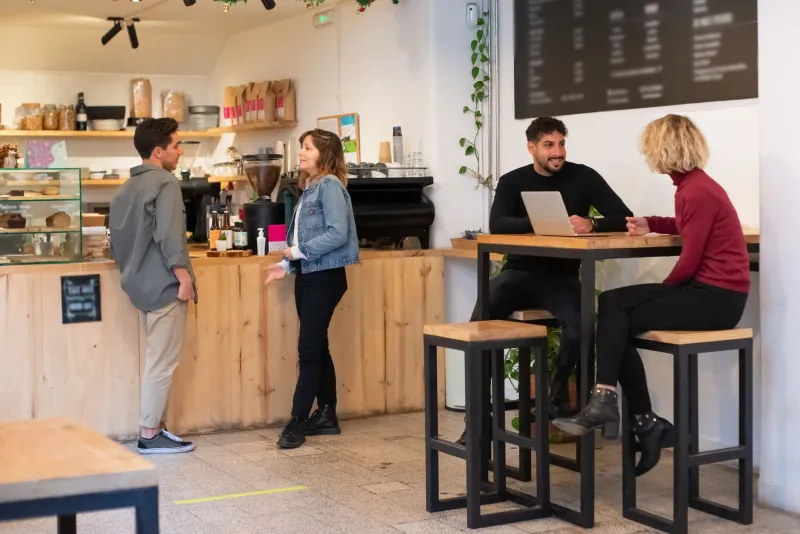
You don't need a porch in Pamekasan to practice this. A lot of Indonesian-Americans are adapting duduk into distinctly American settings — apartment stoops, community gardens, backyard chairs, even coffee shop corners where a group of friends sits together without a structured reason to be there.
The key elements seem consistent across these adaptations: no agenda, no pressure to entertain, low stakes, and the understanding that showing up is the whole contribution.
Rizky's Wednesday hangs have grown from three people to about a dozen. "Some weeks we talk a lot. Some weeks we mostly just eat and listen to music. But everyone keeps coming back because it's one of the only things in the week where nobody needs anything from you."
For Amara, the practice has become something she actively recommends to friends dealing with social anxiety. "The pressure of having to be on all the time is exhausting. Duduk is a space where you're allowed to just exist. That's genuinely therapeutic, even if it doesn't have a therapist."
The Radical Act of Purposeless Presence
America is starting, slowly, to question the hustle gospel. Quiet quitting, the slow living movement, anti-productivity discourse on social media — there are signs everywhere that people are exhausted by the constant optimization of their own existence.
But most of the alternatives being offered are still, at their core, self-improvement projects with better branding. Duduk is something different. It's not asking you to improve. It's not asking you to heal or grow or optimize or document.
It's just asking you to sit down, be near the people you care about, and let that be enough.
For a culture that has spent decades treating "enough" as a word that means "not yet," that might be the most radical thing on offer right now.
And it's been practiced on porches in Madura for generations.