Just Being Here Is Enough: How Indonesian Togetherness Culture Is Quietly Fixing America's Friendship Problem
Somewhere between the third unanswered text and the fourth canceled plans, a lot of Americans are starting to ask the same uncomfortable question: when did friendship get so exhausting?
We schedule it. We optimize it. We perform it on Instagram and then go home feeling somehow lonelier than before. The Surgeon General called it an epidemic in 2023. Researchers are calling it a public health crisis. And yet, the solution most of us reach for — more events, more networking, more structured social activity — might actually be making things worse.
Meanwhile, in living rooms and front stoops and community gathering spots across the Indonesian archipelago, people have been doing something radical for centuries: just sitting together. No agenda. No pressure to be entertaining. No productivity metric to hit. Just presence.
And slowly, quietly, that idea is finding its way into the way younger Indonesian-Americans — and the Americans paying attention to them — are rethinking what it actually means to be close to someone.
The Untranslatable Weight of "Nongkrong"
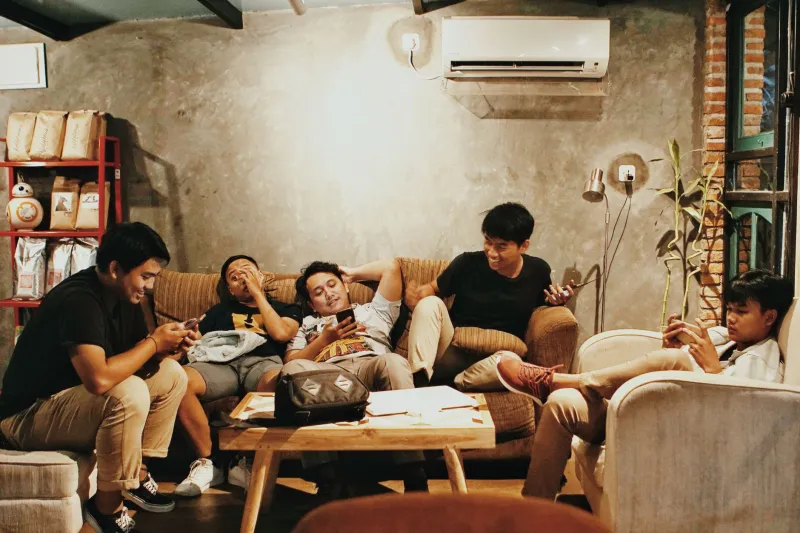
There's a word in Indonesian that doesn't have a clean English equivalent: nongkrong. Loosely, it means hanging out — but that translation flattens something important. Nongkrong isn't about doing something together. It's about being somewhere together. It's the hours spent at a warung over glasses of sweet tea that never quite empty. It's the neighbors who pull chairs onto the porch at dusk without anyone formally inviting anyone else. It's the understanding that your company, on its own, is the point.
"Americans always want to know what we're doing," says Dian, a 28-year-old from Surabaya who's been living in Chicago for five years. "When I tell them we're just sitting, they look confused. Like they're waiting for the rest of the sentence."
For Dian, nongkrong was a given back home — the default mode of friendship maintenance. Here, she's had to actively explain it to non-Indonesian friends who initially interpreted her relaxed, agenda-free hangouts as a lack of effort. "It took a while, but now some of my American friends actually prefer it. Nobody has to perform. Nobody has to have something interesting to say. You just... show up."
Presence as Practice
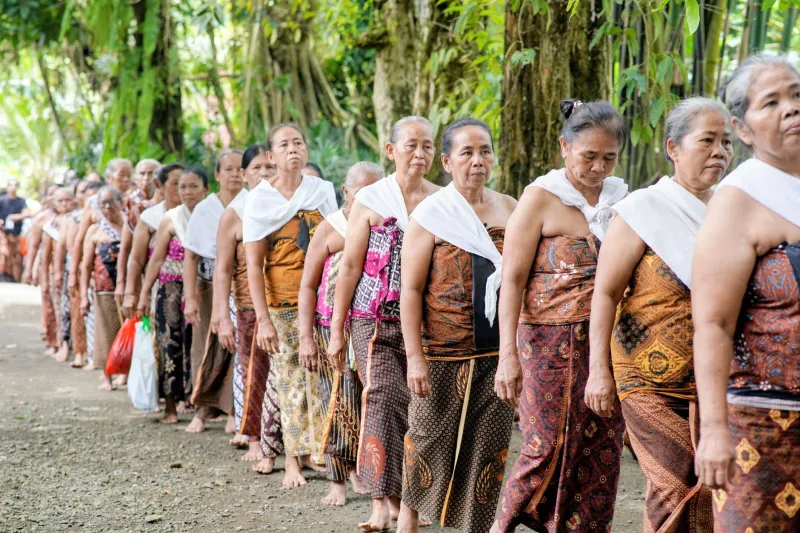
The concept goes deeper than casual hangouts. Indonesian social culture — particularly in communities like those in Madura and East Java — places enormous value on kebersamaan, a word that translates roughly as togetherness or communal solidarity. But unlike the American version of "community," which often implies shared purpose or organized action, kebersamaan is more elemental. It's about the comfort of not being alone, and the quiet affirmation that comes from someone choosing to sit near you, even when neither of you has anything particular to say.
Cultural observer and writer Reza Kusuma, who splits his time between Jakarta and Los Angeles, puts it this way: "In the West, silence between two people often reads as awkward or disconnected. In Indonesian culture, comfortable silence is actually a sign of deep trust. You don't have to fill the space. The relationship holds it."
This distinction matters enormously in the context of what researchers are now calling "performative friendship" — the exhausting cycle of curated social interactions that look like connection but don't actually deliver the psychological safety that humans need to feel less alone. Studies out of Harvard and UCLA have shown that what people actually need isn't more social activity, but more moments of genuine, low-stakes presence with others. The Indonesian model, it turns out, has been doing this by instinct for generations.
The Warung as Third Place
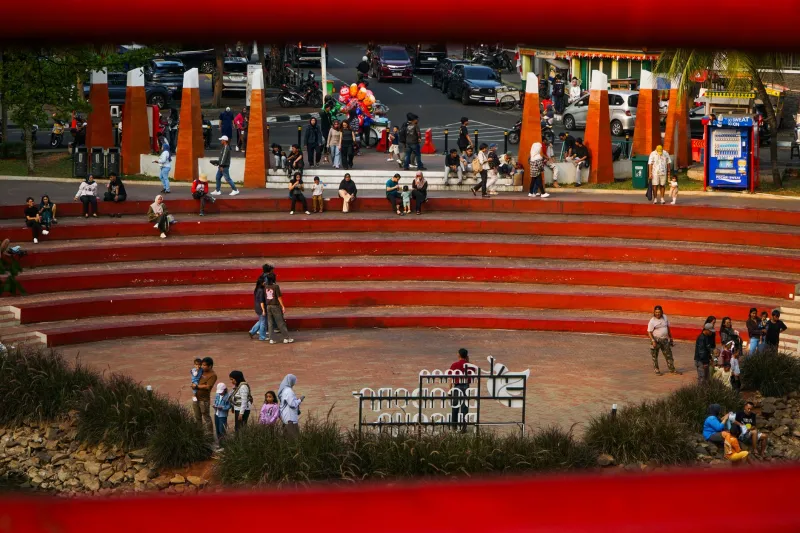
One of the most concrete expressions of Indonesian togetherness culture is the warung — the small, informal neighborhood food stall that functions as far more than a place to eat. Warungs are social infrastructure. They're where people linger after meals, where conversations start and stop and start again, where the community's emotional temperature gets taken on any given afternoon.
Urban planners and social scientists in the US have long talked about the importance of "third places" — spaces that aren't home and aren't work, where people can gather without commercial pressure or social obligation. The classic American examples are the barbershop, the diner, the front porch. But those spaces have been quietly disappearing, replaced by coffee chains designed for laptop productivity and bars optimized for turnover.
Indonesian-American communities have been recreating warung energy in their own ways — backyard gatherings that run for hours, informal potlucks where the food is secondary to the staying, community spaces at mosques and cultural centers designed less for programming and more for simply hanging around. And younger people outside those communities are starting to notice.
"I went to a gathering at my Indonesian friend's family's place and I didn't want to leave," says Marcus, 31, a graphic designer from Detroit. "Nobody was trying to impress anyone. People just kept arriving and sitting down and talking about nothing. It was the most relaxed I'd felt in months."
What This Actually Does to Your Brain
It's not just vibes. There's real neuroscience behind why this style of togetherness works. Social psychologists distinguish between "high-arousal" social interactions — the kind that require performance, wit, and social navigation — and "low-arousal" ones, where people simply coexist without demands on their attention or identity. Low-arousal connection, it turns out, is often more restorative. It activates the parasympathetic nervous system, reduces cortisol, and builds the kind of ambient trust that makes people feel genuinely known rather than just liked.
For a generation raised on the dopamine spikes of social media validation, that kind of slow, unspectacular connection can feel almost foreign at first. But therapists and mental health advocates working with young Indonesian-Americans say it's becoming a serious part of how their clients think about healing.
"A lot of my clients grew up watching their parents and grandparents just be together in this very unhurried way," says a therapist based in the Bay Area who works primarily with Asian-American young adults. "And then they got to college and everything became about productivity, networking, building your brand. Reconnecting with that older model of presence — it's genuinely therapeutic for them."
Slowing Down Without Opting Out
None of this means Americans need to abandon their social calendars or pretend the group chat doesn't exist. What Indonesian togetherness culture offers isn't a rejection of modern life — it's a recalibration. A reminder that not every interaction needs to justify itself with an outcome. That friendship can be maintained in the spaces between plans, in the unhurried hour after dinner, in the willingness to sit near someone you love without needing to entertain them.
For Dian, the shift has been gradual but real. Her Chicago apartment has become, in her words, "a little bit of a warung" — the kind of place where people stop by without much reason and end up staying longer than they planned. "My American friends joke that time moves differently at my place," she says, laughing. "I think that's exactly the point."
In a culture that has monetized attention and gamified connection, the most countercultural thing you might do this weekend is invite someone over and just... not have a plan. Let the evening be unproductive. Let the silence sit. Let the company be enough.
Turns out, it usually is.