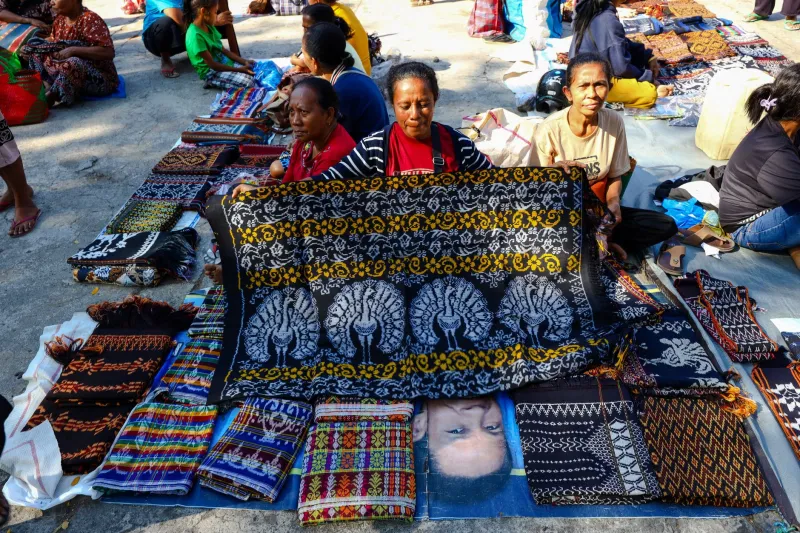
What a Small Madurese City Knows About Belonging That America Has Forgotten
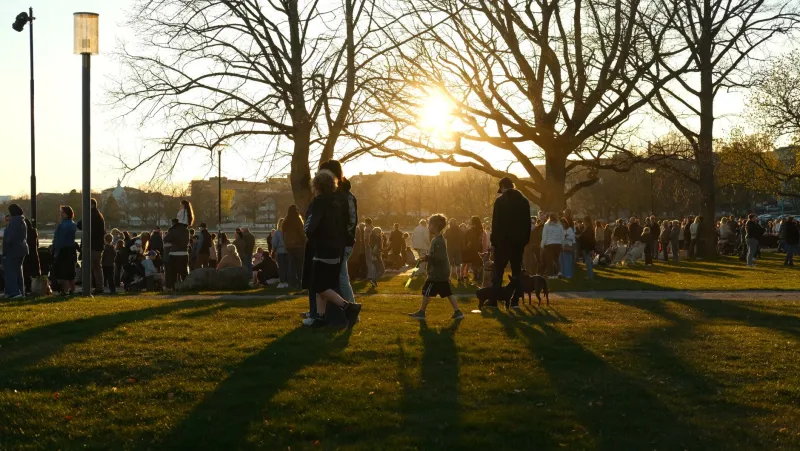
There's a loneliness epidemic in America. You've probably heard that by now — the surgeon general said so, researchers keep confirming it, and honestly, most of us have felt it firsthand. We live next to people we've never spoken to. We drive past parks that nobody uses. We join apps designed to connect us and somehow end up feeling more alone.
Meanwhile, about 9,000 miles away, a city called Pamekasan on the Indonesian island of Madura has been doing something quietly radical: keeping people actually connected. Not through an algorithm. Not through a wellness program. Just through the way the community is built — physically, socially, and culturally.
So what's the blueprint? And can Americans borrow it?
The Alun-Alun Effect: Why Public Squares Still Matter
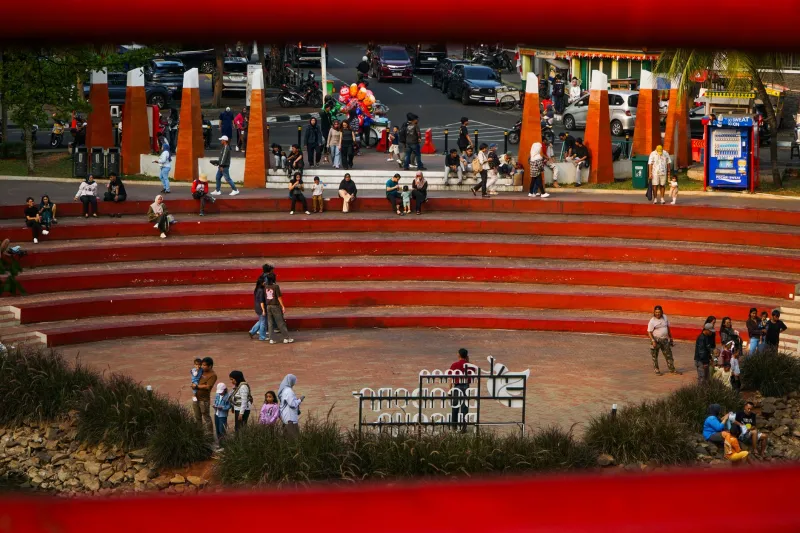
Every Madurese city worth its salt has an alun-alun — a central public square that serves as the social heartbeat of the community. In Pamekasan, the alun-alun isn't just decorative. It's functional in a way that most American town squares stopped being decades ago.
On any given evening, you'll find families spreading out mats, vendors selling snacks, teenagers hanging around without agenda, elders watching the foot traffic. There's no ticketed event. No curated experience. Just people sharing space because that's what the space was designed for.
Rima Santoso, a 34-year-old urban designer from Surabaya who now works with a planning firm in Portland, Oregon, grew up visiting Pamekasan's alun-alun with her grandparents. "When I first moved to the US, I kept waiting for the version of that," she told us. "The park near my apartment had a sign listing everything you couldn't do in it. No ball games. No amplified music. No gathering after 10pm. It was a park designed to prevent community, not create it."
Rima has since started consulting with her firm on what she calls "permission-forward" public space design — spaces that invite use rather than restrict it. She credits her Madurese upbringing with giving her the language to articulate what was missing.
Gotong Royong: The Collaborative Work Ethic That Builds More Than Projects
If the alun-alun is Pamekasan's social living room, then gotong royong is its operating system. Loosely translated as mutual cooperation, gotong royong is the practice of neighbors coming together to tackle shared tasks — building a fence, cleaning a street, preparing food for a community event — without expectation of individual payment or credit.
It sounds almost utopian to American ears, conditioned as we are to think of labor as something you either pay for or trade. But gotong royong isn't charity and it isn't barter. It's something closer to a shared understanding that the community's wellbeing is inseparable from your own.
Danny Wirawan moved from Pamekasan to Columbus, Ohio about six years ago. He works in logistics by day, but on weekends he's been quietly organizing what he calls "neighborhood work days" in his suburban cul-de-sac. "I just started small," he said. "Asked a few neighbors if they wanted to help clear out the drainage ditch that kept flooding everyone's yard. I brought food. We got it done in two hours. Now we do it every few months for different things."
The results surprised him. "People started talking to each other. Like, really talking. One guy didn't even know his next-door neighbor's name after three years. Now they carpool."
Danny didn't pitch it as an Indonesian concept. He just did it. But the roots were unmistakably Madurese.
Architecture That Forces Eye Contact
One of the less-discussed aspects of community life in Pamekasan — and across much of Madura — is the physical layout of residential neighborhoods. Traditional Madurese housing clusters called tanean lanjhang arrange multiple family units around a shared courtyard, with a communal kitchen and gathering space at the center. Privacy exists, but isolation is structurally difficult.
This isn't just aesthetically charming. It's functionally powerful. When your home opens onto a shared space, you encounter your neighbors constantly — not by appointment, not by effort, just by existing. Relationships form through repetition and proximity, not through deliberate social planning.
American suburbs, by contrast, were largely designed to maximize private space and minimize shared space. Garages face the street. Backyards are fenced. Front porches — once the American version of the tanean lanjhang's shared courtyard — have been shrinking for fifty years as air conditioning and streaming services pulled people inside.
Some American architects and developers are starting to push back. Cohousing communities, pocket neighborhoods, and accessory dwelling unit clusters are all gesturing toward what Madurese residential design has practiced for generations. They just don't always know where the inspiration is coming from.
The Role of the Warung: More Than Just a Snack Stop
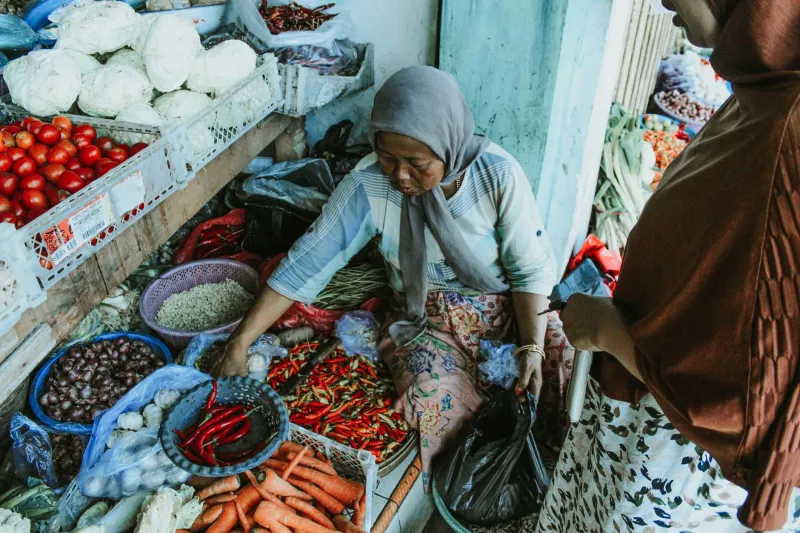
In Pamekasan, the warung — a small, often family-run food stall or shop — functions as something between a corner store, a therapist's office, and a community bulletin board. You don't just go to buy food. You go to catch up, to hear what's happening, to be seen.
The warung owner knows your name, your kids' names, probably your parents' names. They know when you're having a rough week because you've been buying more cigarettes or skipping your usual afternoon snack. That ambient social awareness is a form of community care that doesn't require a nonprofit or a government program.
Indonesian-American food entrepreneurs in cities like Los Angeles, Houston, and Seattle are beginning to lean into this model — not just selling food, but creating spaces where regulars are regulars in the fullest sense of the word. "I don't want to just run a restaurant," said Yuni Halimah, who opened a small Indonesian spot in Seattle's Beacon Hill neighborhood two years ago. "I want people to feel like they belong here. That's what a warung does. It holds people."
So What Can American Communities Actually Do?
None of this requires moving to Madura or rebuilding your city from scratch. The principles are surprisingly portable.
Reclaim shared outdoor space. Push back on the over-restriction of public parks. Advocate for spaces where people can gather without a permit, a ticket, or a schedule.
Start a gotong royong, even if you don't call it that. Organize one communal work event in your neighborhood around something practical — a cleanup, a garden build, a mural. Bring food. Don't make it transactional.
Support your local warung equivalent. That means your neighborhood diner, your corner bodega, your family-run coffee shop. These aren't just businesses — they're social infrastructure. Treat them like it.
Design for encounter. If you're building or renovating, think about where people will accidentally run into each other. A front porch. A shared garden. A bench facing the sidewalk. Belonging doesn't happen in isolation — it happens in the in-between moments.
Pamekasan isn't a perfect city. No city is. But it holds something that a lot of American communities have lost and are desperately trying to find — the sense that you are part of something larger than your household, that your neighbors are your people, and that showing up for each other is just what you do.
That's not a cultural artifact. That's a design choice. And it's one America can start making right now.