Slow Down, It's Sundown: How Ngabuburit Is Teaching Burned-Out Americans to Just... Be
Somewhere between your third Slack notification and your fifth half-finished cup of coffee, you might have started wondering if there's another way to exist. Not a productivity hack, not a morning routine backed by a podcast, and definitely not a $40 adaptogen latte — just a different relationship with time itself.
That's exactly what a growing number of Indonesian-Americans, wellness seekers, and genuinely exhausted people are finding in an old tradition called ngabuburit.
Pronounced roughly nga-boo-boo-rit, it's a word that doesn't translate neatly into English — which is kind of the whole point.
What Even Is Ngabuburit?
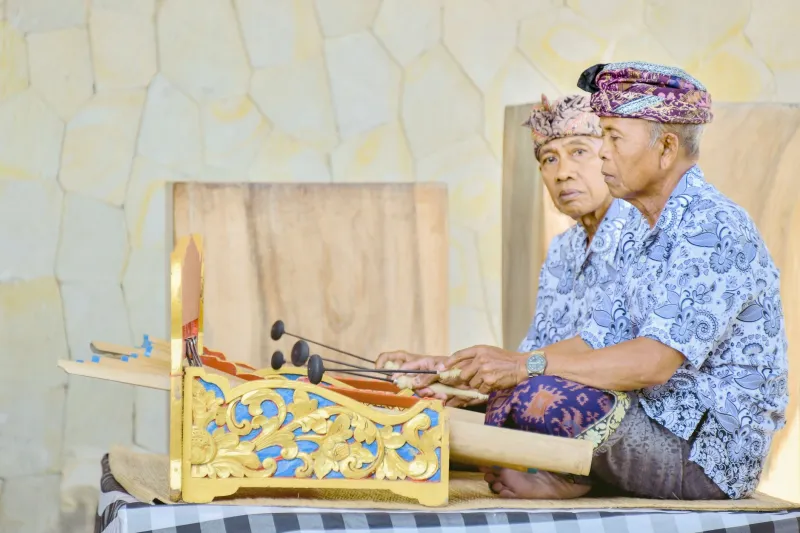
At its core, ngabuburit is the Indonesian practice of filling the late afternoon hours during Ramadan with slow, intentional, low-stakes activity while waiting for the sun to set and the fast to break. Think: wandering through a market without a shopping list, sitting on a porch and watching the neighborhood move, chatting with friends over nothing in particular, or just... listening to the city breathe.
The word itself comes from Sundanese — the language of West Java — and it carries a built-in sense of ease. You're not accomplishing anything. You're not optimizing. You're just occupying time gently, with presence, until something shifts.
In Indonesia, ngabuburit is deeply communal. Streets fill up. Food vendors appear. Mosques hum with low conversation. Families sit together without an agenda. It's less about religious obligation and more about a shared cultural agreement that this window of time belongs to softness.
Why Americans Are Listening Now
Here's the thing about American wellness culture: it has a productivity problem. Even rest has become a performance. Sleep trackers, recovery scores, scheduled downtime blocked off in Google Calendar — we've turned the absence of work into another form of work. Burnout is at record levels, and the solutions being sold to us often just create a new to-do list.
Ngabuburit doesn't do that. It refuses to.
"There's no deliverable," laughs Dina Kusuma, a 31-year-old Indonesian-American living in Chicago who grew up observing Ramadan with her family in Surabaya. "You're not journaling for growth. You're not meditating to increase focus. You're just sitting somewhere nice and letting the afternoon go by. That's it."
For Dina, sharing that concept with her non-Muslim, non-Indonesian coworkers has been unexpectedly resonant. "I described it once at work and three people immediately said, 'That's what I need.' They weren't interested in Ramadan specifically — they were interested in the idea that you could just pause without it meaning something was wrong with you."
That reaction isn't unusual. Across social media, particularly on TikTok and Instagram, Indonesian-Americans have started sharing their ngabuburit routines — and the response from non-Indonesian audiences has been striking. Comments like "we need this in America" and "why don't we have a word for this" appear again and again.
The Secular Remix
What's interesting about ngabuburit's crossover moment is how Indonesian-Americans are navigating its spiritual origins with care and honesty.
For many, the tradition is inseparable from Ramadan — it's a sacred waiting, a bodily discipline, a communal act of faith. And that context matters. But there's also a growing conversation about whether the spirit of ngabuburit — intentional idleness, community, presence — can be shared across cultural and religious lines without stripping it of meaning.
"I'm not trying to sell ngabuburit as a productivity tool or a wellness brand," says Reza Hartanto, a second-generation Indonesian-American based in Portland who runs a small cultural events series. "But I do think there's something real here that people outside the Muslim community can connect to — this idea that late afternoon is a liminal time, a soft time, and we're allowed to honor that."
Reza has started hosting informal pre-sunset gatherings that he loosely frames around the ngabuburit concept — no phones out, no agenda, just food and slow conversation as the sky changes color. He's careful to explain the tradition's roots to attendees, many of whom come from entirely different backgrounds. "People show up grateful. There's something about naming that time of day as sacred — even just culturally sacred — that gives people permission to stop."
The Science of Slowing Down at Sunset
There's actually something physiologically interesting about the pre-sunset window that ngabuburit occupies. Late afternoon — roughly 4 to 7 p.m. — is when cortisol levels naturally begin to drop, and the body starts its slow pivot toward evening. It's a transitional time that our always-on culture tends to bulldoze right through with commutes, after-hours emails, and evening scrolling.
Researchers who study rest and circadian rhythm have noted that honoring this transition — rather than fighting it — can meaningfully reduce stress and improve sleep quality. You don't need a clinical study to feel it, though. Most people, when asked, will admit that something about late afternoon feels different. Softer. More forgiving.
Ngabuburit, in a sense, is a centuries-old cultural technology for working with that feeling instead of against it.
What It Actually Looks Like in America
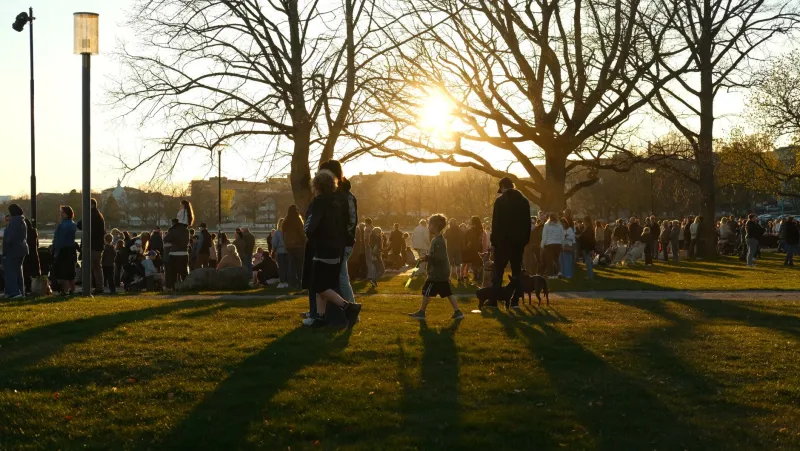
For Indonesian-Americans observing Ramadan, ngabuburit in the US often looks like a creative adaptation of home. Community center parking lots become impromptu bazaars. Group chats organize park meetups. Someone's mom makes martabak — a stuffed Indonesian pancake — and suddenly twenty people are sitting on someone's back deck watching the sunset and talking about nothing important.
But even outside of Ramadan, the concept is spreading. Some Indonesian-American families have started treating Sunday late afternoons as a kind of secular ngabuburit — a household rule that the 4-to-6 p.m. window is for wandering, not working. Others have introduced it to friend groups as a loose framework for analog hangouts in a screen-heavy era.
"My roommates aren't Indonesian," says Sari Wulandari, a grad student in Austin. "But I explained ngabuburit to them once, and now we have this unofficial thing where we sit on the apartment steps before dinner and just exist for a while. Nobody's on their phone. We just talk or don't talk. It's become my favorite part of the day."
An Antidote That Doesn't Ask Much
Maybe what makes ngabuburit so quietly compelling to an American audience is precisely its lack of demand. It doesn't require equipment, a subscription, or a transformation arc. It asks you to find a comfortable spot sometime before dark, to be with people or with yourself, and to let the hour pass without extracting value from it.
In a culture that has monetized mindfulness, gamified exercise, and turned sleep into a competitive sport, that kind of radical ordinariness feels almost rebellious.
It's not a trend, exactly. It's older than any wellness brand, rooted in community and faith and the particular light of an Indonesian afternoon. But it's landing here, in American cities and suburbs, carried by people who grew up knowing that some hours are meant to be spent — not invested.
And honestly? That might be exactly what the rest of us have been waiting for.