Small Town, Big Mood: Why American Creatives Are Obsessed With a Place They've Never Been
There's a particular kind of internet rabbit hole that swallows you whole around 1 a.m. You start on a mood board, click through to a Substack, land on a Pinterest page full of hand-dyed cloth and sun-bleached market stalls, and suddenly you're deep in the visual language of a place you couldn't find on a map twenty minutes ago. For a growing number of American Gen Z creatives, that place is Pamekasan.
Yes — the town this very site is named after. A city of roughly 200,000 people on the island of Madura, just off the northeastern coast of Java. Not Bali. Not Jakarta. Pamekasan.
So how did a regional Indonesian town that most Americans couldn't locate without a Google assist become a quiet muse for indie designers in Portland, bedroom musicians in Atlanta, and small-batch ceramicists in Brooklyn? It's a strange story, and it says as much about American creative culture as it does about Madura itself.
The Aesthetic That Snuck Up on Everyone
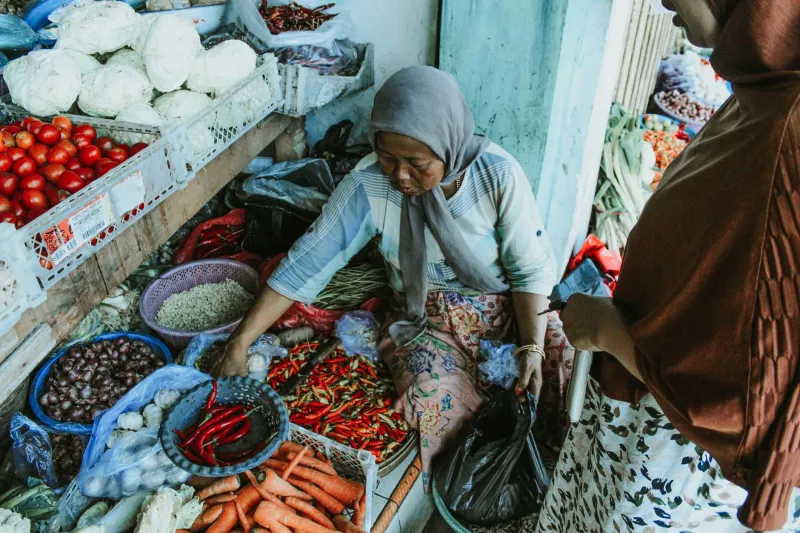
If you spend any time in corners of TikTok or Instagram where "slow living" content lives — think handmade everything, earth tones, markets with no logos, food that looks like it was cooked by someone's grandmother — you've probably already absorbed a version of Pamekasan's visual world without realizing it.
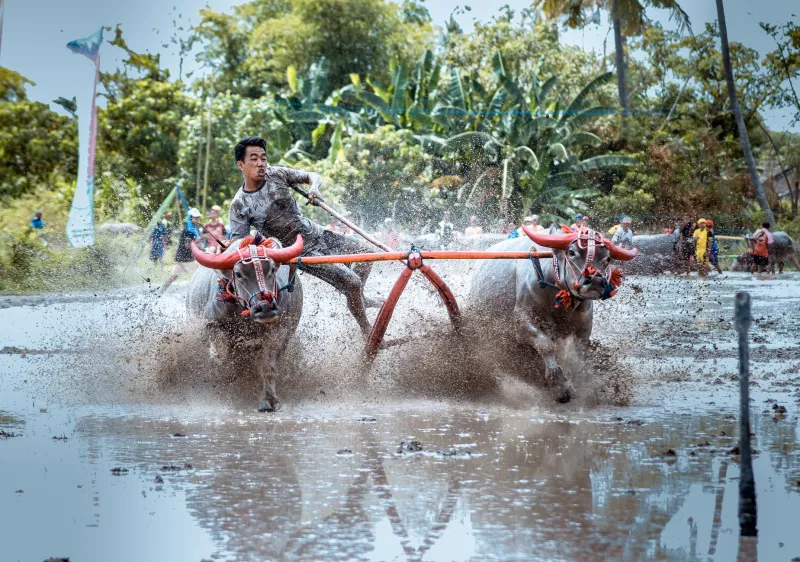
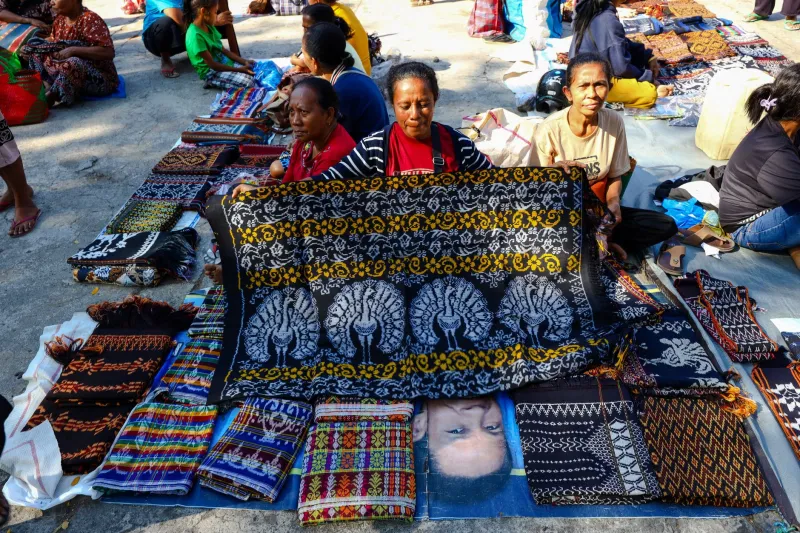
The town is known for a few things that translate beautifully into image: its batik tradition (distinct from the more internationally famous Javanese styles), the dramatic pageantry of kerapan sapi bull races held on the outskirts, the dense, layered street food culture, and a built environment that hasn't been smoothed over by the kind of global homogenization that makes every city center look the same. It's textured in a way that a lot of American cities just aren't anymore.
Designers have caught on. Search "Madura-inspired" on Etsy or Depop and you'll find everything from hand-block-printed tote bags to earrings referencing the geometric patterns found in local weaving. Most of the sellers are American. A fair number have never visited Indonesia at all.
The Authenticity Paradox
Here's where it gets complicated — and worth sitting with.
There's something genuinely beautiful about a regional Indonesian town capturing the imagination of people thousands of miles away. It pushes back against the idea that "global culture" only flows in one direction, from dominant Western centers outward. When a 24-year-old in Asheville, North Carolina builds a whole brand aesthetic around the color palettes and craft traditions of Madura, that's not nothing.
But there's a flip side, and it's uncomfortable. The version of Pamekasan that circulates in American digital spaces is, almost by definition, a curated fantasy. It's the golden-hour market photo, not the economic pressures on small vendors. It's the hand-dyed fabric, not the artisans who are underpaid for making it. It's the feeling of a place — untouched, timeless, real — stripped of the actual, complicated, modern lives being lived there.
People in Pamekasan have smartphones. They have opinions about K-pop and American fast food and the latest Indonesian soap operas. They are not frozen in an aesthetic amber for anyone's mood board. And when outside attention romanticizes a place into a symbol of "authentic living," it can create a weird kind of erasure — the actual community disappears behind the idea of the community.
This isn't unique to Pamekasan, of course. It's happened to Oaxaca, to rural Appalachia, to pretty much every place that gets discovered by a certain kind of cultural tourist. But it's worth naming when it happens.
What the Creatives Actually Say
To be fair, not everyone driving this trend is operating from a place of pure aesthetic extraction. Some are Indonesian-American, reconnecting with regional roots their families rarely talked about. Others are design students genuinely trying to credit and research the traditions they're drawing from. A few have reached out directly to Madurese artisans through platforms like Novica or direct Instagram DMs, building actual relationships and paying real prices for real craft.
One textile designer based in Seattle — who asked to go by her first name, Kira — told us she spent six months researching Madurese batik before incorporating any of its motifs into her work. "I didn't want to just grab an image and run with it," she said. "I wanted to understand what the patterns meant, who made them, what the context was. And the more I learned, the more I realized I couldn't just reduce it to a vibe."
That kind of intentionality is rare, but it exists. And it points toward a more honest version of cross-cultural creative influence — one that involves actual curiosity, actual research, and ideally, actual money flowing back to the source communities.
The Town Itself Isn't Standing Still
Meanwhile, Pamekasan is doing its own thing, largely indifferent to its emerging status as an American creative reference point. The city has been investing in cultural tourism infrastructure, with local government initiatives aimed at promoting the batik industry and the bull-racing tradition as regional draws. Young Madurese creatives are building their own design practices, their own music scenes, their own takes on what it means to be from this specific place in this specific moment.
There's a certain irony in the fact that while American Gen Z romanticizes Pamekasan as a refuge from modernity, the town's own youth are navigating all the same pressures — digital overwhelm, economic uncertainty, the tension between global culture and local identity — that their American counterparts are supposedly escaping to Pamekasan to avoid.
Maybe that's the most honest thing you can say about this whole phenomenon: the longing runs in multiple directions at once.
So What Do We Do With This?
If you're an American creative who's been drawn into the orbit of Pamekasan's visual world — or Indonesian regional culture more broadly — here's a genuinely casual, non-preachy suggestion: go deeper than the aesthetic.
Read about the actual history of Madura. Look up the specific names of batik patterns and what they signify. Follow Madurese artists and designers on social media — not to mine their feeds for inspiration, but to actually see what they're making and thinking about. If you're buying craft goods, try to source them in ways that compensate makers fairly.
And maybe most importantly: hold the fantasy lightly. Let the beauty of Pamekasan's visual culture move you without flattening it into a symbol. Real places are more interesting than perfect ones.
That's kind of the whole point of this site, honestly. Mana Pamekasan exists because the actual town — complicated, modern, alive — deserves more than a corner of someone's mood board. It deserves a real look.