No Agenda, No Problem: How Indonesian Warung Culture Is Giving Americans Permission to Just Sit There
Somewhere between your third Slack notification and your second cold brew, you probably had a thought that felt almost rebellious: What if I just... didn't? Didn't check the app. Didn't optimize the hour. Didn't turn the hangout into a networking opportunity or document it for the feed.
If that thought crossed your mind, you might be more aligned with Pamekasan café culture than you realize.
In the coastal Madurese city of Pamekasan — the kind of place most Americans couldn't point to on a map but are increasingly drawn to for reasons they can't quite name — the neighborhood warung isn't just a coffee shop. It's a philosophy. A low-key, flip-flop-friendly, no-judgment zone built entirely around the radical act of being somewhere without needing to produce anything while you're there.
And right now, that philosophy is quietly finding its way into American cities, community spaces, and the renovation plans of a new wave of entrepreneurs who are done building places that feel like productivity pods with better lighting.
What Actually Happens in a Warung
Let's get specific, because the warung concept gets misunderstood a lot when it travels.
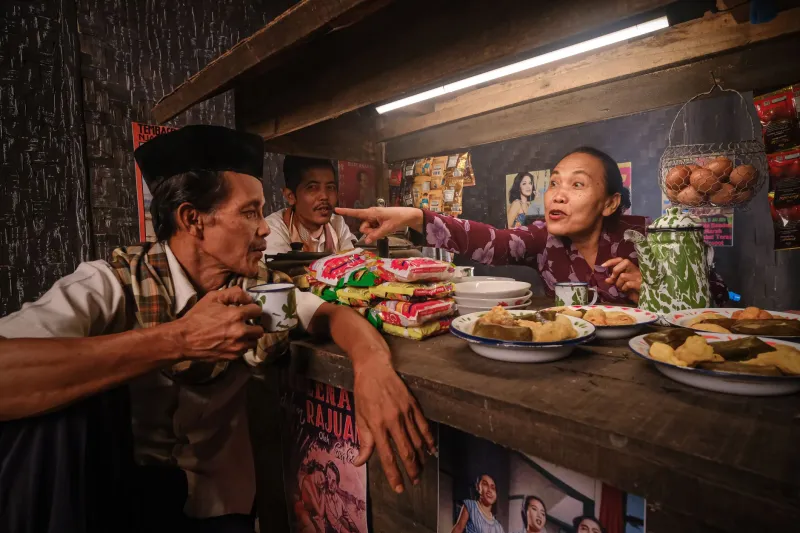
A warung is not a trendy café with a curated playlist and $9 lattes. It's not a coworking space with exposed brick. It's usually small, often family-run, and almost always designed around conversation rather than consumption. You might get a glass of kopi tubruk — that thick, sweet, unfiltered Indonesian coffee where you wait for the grounds to settle before you sip — and then you just... hang out. With whoever shows up. For however long feels right.
In Pamekasan specifically, warungs function as community anchors. Regulars drop in not because they have somewhere to be, but because the warung itself is the destination. The point isn't the coffee. The coffee is just the excuse.
There's no loyalty app. No productivity hack hiding inside the experience. The value is entirely social, entirely present-tense, and entirely unmonetizable — which, in the American context, makes it feel almost countercultural.
Why Americans Are Burning Out on Their Own Third Spaces
The concept of a "third space" — somewhere that isn't home, isn't work — has been part of urban planning and social theory for decades. The idea is that humans need somewhere neutral to gather, somewhere low-pressure where community forms naturally.
The problem? Most American third spaces have quietly been colonized by productivity culture. Coffee shops became remote offices. Gyms became optimization centers. Even bars started offering "networking hours." The unspoken pressure to be doing something, consuming something, or at least posting something has crept into nearly every space designed for leisure.
And Gen Z, in particular, is exhausted by it. Studies consistently show that young Americans report higher levels of loneliness than older generations, even as — or maybe because — they're more digitally connected than anyone in history. The constant screen engagement isn't filling the gap. If anything, it's widening it.
What people are actually craving, it turns out, isn't another app or another optimized experience. It's something closer to what a warung in Pamekasan has been offering for generations: a reason to show up in person, a low-stakes reason to stay, and absolutely zero pressure to make it mean anything beyond the moment itself.
The Entrepreneurs Paying Attention
Across the US, a small but growing number of café owners, community organizers, and creative space builders are drawing direct or indirect inspiration from Southeast Asian gathering culture — and warung-style hospitality is increasingly part of that conversation.
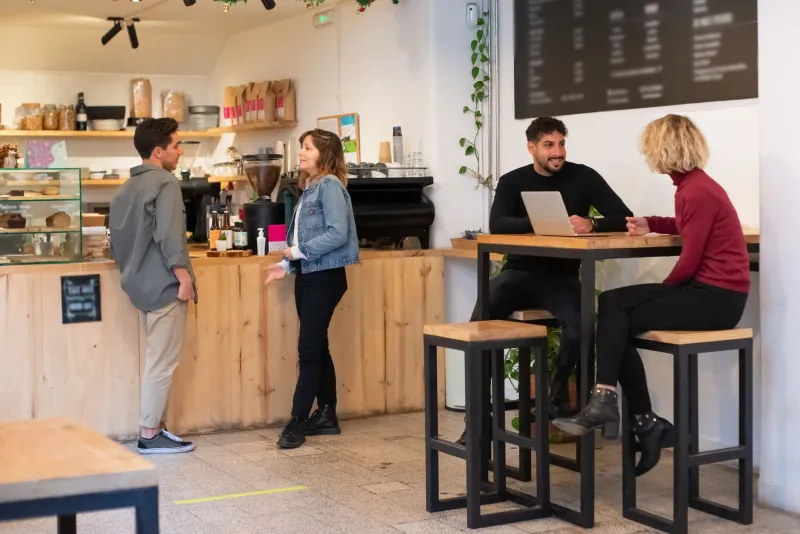
In cities like Portland, Austin, and parts of Brooklyn, you're starting to see spaces that deliberately resist the coworking aesthetic. No power strips lining every wall. No "hustle harder" murals. Instead: mismatched chairs, communal tables that actually encourage strangers to talk, and menus that don't require a finance degree to navigate. Some owners describe their vision explicitly in terms of Southeast Asian hospitality — that sense of silakan (go ahead, make yourself comfortable) baked into the physical space itself.
One café owner in Chicago who spent time traveling through Java and Madura described it this way: "In every warung I visited, I never once felt like I was taking up space. I felt like I was adding to it just by being there. That's the energy I wanted to bring back."
That's a harder thing to design than it sounds. It requires resisting the urge to fill every corner with revenue-generating potential. It means training staff to not rush turnovers. It means accepting that some people will sit for two hours and only order one thing — and that's not a problem, that's the whole point.
Presence as the Product
Here's the cultural shift that's hard for Americans to fully absorb: in warung culture, your presence is the contribution. You don't need to buy more, do more, or be more impressive than you actually are. Showing up — physically, attentively, without your face buried in a screen — is the whole thing.
This idea runs almost perfectly counter to the optimization mindset that's dominated American social and professional life for the past decade. We've been conditioned to treat free time as potential productivity, and gathering spaces as networking opportunities in disguise. The warung flips that entirely.
And Gen Z, raised on the paradox of being hyper-connected and profoundly isolated, seems to be increasingly ready for that flip. The same generation that turned "touch grass" into a genuine wellness directive is also the one quietly seeking out spaces where the vibe isn't about performance. Where you can be bad at conversation and still belong. Where the coffee is just coffee and the company is just company.
What Pamekasan Knows That Silicon Valley Doesn't
There's something almost funny about the fact that one of the most effective antidotes to screen fatigue might be a concept that's been standard in a mid-sized Indonesian city for generations. No venture capital required. No beta testing. No waitlist.
Pamekasan's warung culture didn't emerge from a design sprint or a consumer insights report. It emerged from a deep, practical understanding of what humans actually need from each other: proximity, low pressure, and the unspoken agreement that being here is enough.
American culture is starting to remember that, too — slowly, imperfectly, one mismatched chair at a time.
If you're building a space, running a community, or just trying to figure out how to spend a Saturday afternoon without turning it into a self-improvement project, the warung has a suggestion. Pull up a chair. Order something simple. Let the conversation go wherever it wants.
There's no agenda. That's the whole point.