Forget Karate: The Indonesian Martial Art That's Taking Over American Gyms
A Different Kind of Fight Night
Walk into most American martial arts studios on a Tuesday evening and you know what you're going to get. Maybe Brazilian jiu-jitsu. Maybe Muay Thai. Probably some flavor of MMA cross-training. The landscape of American combat sports has been pretty well mapped for the last couple of decades.
Then you walk into a silat class and everything you thought you knew about what a martial art looks like goes slightly sideways.
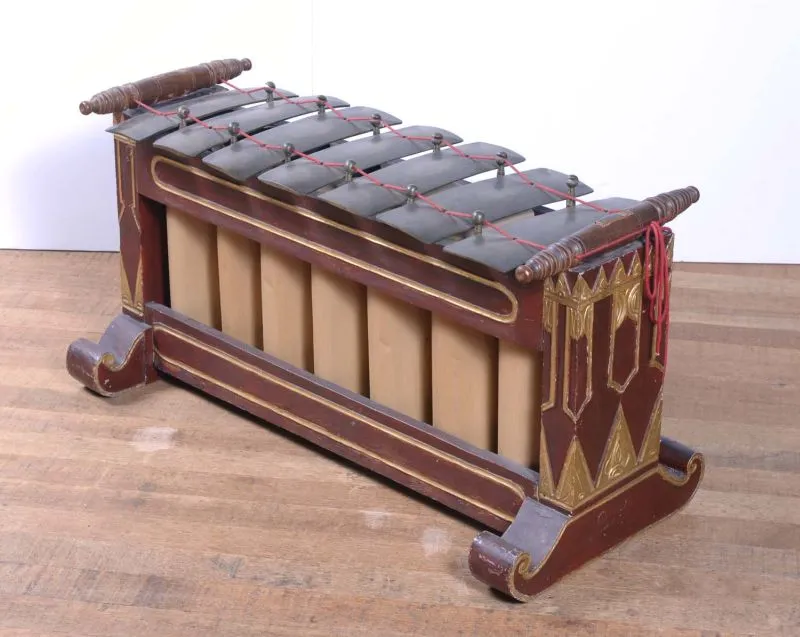
People are moving in ways that look more like dancing than fighting — low sweeping stances, sudden directional shifts, footwork patterns that seem almost ceremonial. Someone in the corner is working with a kerambit, a small curved blade, moving it through drills with a kind of focused grace that makes you forget you're watching a weapon. There's music playing — traditional Indonesian percussion, soft but present. The whole room has a different energy than a boxing gym. Quieter, somehow. More intentional.
This is pencak silat, and it's coming to a city near you.
What Is Pencak Silat, Exactly?
Pencak silat is the collective term for a family of Indonesian martial arts that developed across the archipelago over centuries. Different regions produced different styles — Minangkabau silat from West Sumatra, Betawi silat from Jakarta, Cimande from West Java, Madura's own traditions — each with distinct techniques, weapons, and philosophical frameworks. What they share is a holistic approach to combat that integrates striking, grappling, weaponry, and something harder to quantify: a spiritual and ethical dimension that practitioners call budi pekerti, roughly translated as moral character.
In Indonesia and Malaysia, silat isn't just a sport or a self-defense system. It's a cultural institution tied to community identity, rites of passage, and traditional ceremony. The pesilat — the silat practitioner — is ideally not just a capable fighter but a person of integrity and discipline. That philosophical weight is part of what's drawing Americans to it right now.
Why Now? The Netflix and Algorithm Factor
If you ask studio owners and instructors when they started seeing serious upticks in interest, most of them point to a window between 2019 and the present, and they'll usually mention the same few cultural touchstones.
The Indonesian action film The Raid — which came out in the US in 2012 but found massive new audiences through streaming — is almost always the first thing mentioned. The film's fight choreography, built almost entirely on pencak silat techniques, is legitimately unlike anything most American audiences had seen before. The The Raid 2 doubled down. Both films spread through martial arts circles and action movie fan communities for years before silat started showing up in gym programming.
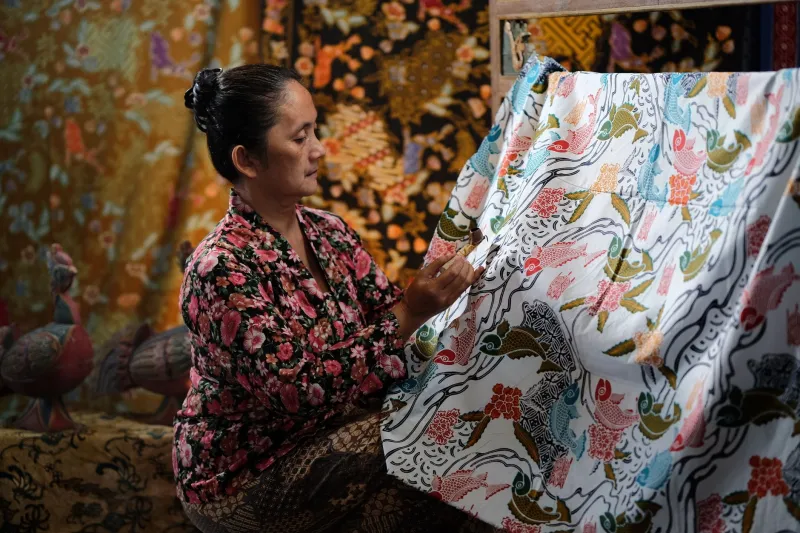
More recently, short-form video has done for silat what it did for batik — put it in front of people who weren't looking for it and made them curious. Clips of Indonesian silat demonstrations, with their combination of combat precision and almost dance-like performance elements, perform extremely well on platforms where visual novelty matters. A well-shot silat demo is genuinely stunning to watch, and stunning things get shared.
Studio Owners on the Ground
Across the US, a small but growing number of studios are now offering pencak silat as a primary or supplementary program. Many are run by Indonesian-Americans or by non-Indonesian instructors who trained directly with Indonesian masters — a lineage that matters deeply in silat culture, where the transmission of knowledge from teacher to student carries significant weight.
What these instructors consistently describe is a student profile that skews curious rather than purely athletic. People come in having watched The Raid or a YouTube demonstration. They come in interested in the cultural context, not just the techniques. They ask questions about the regional traditions, about the weapons, about the music. They want the whole thing, not just a workout.
That's somewhat different from what you see with, say, a beginner Muay Thai class, where most students are there for fitness and self-defense fundamentals. Silat attracts people who are specifically seeking something outside the mainstream martial arts menu — and increasingly, that's a significant demographic.
The Weapons Question
One of the things that genuinely sets pencak silat apart in the American martial arts landscape is how central weapons training is to the art. Not as an advanced add-on, not as a separate specialty track, but woven into the fundamental curriculum from early on.
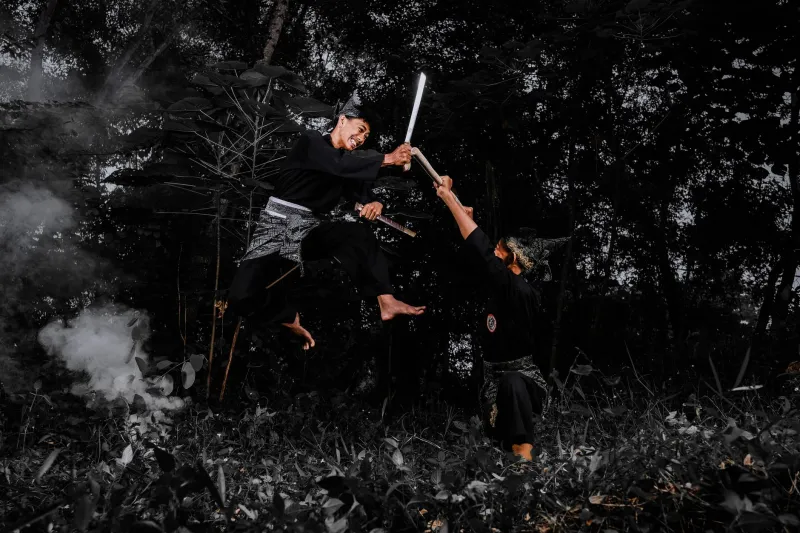
The kerambit, golok (a machete-style blade), tongkat (staff), and sarung (yes, a traditional fabric wrap used as a weapon) are all part of silat's standard toolkit. For Americans raised on martial arts traditions where weapons come later and are often treated as almost ceremonially separate from empty-hand work, this integration is initially surprising and then, for many students, revelatory.
Instructors note that weapons training in silat changes the way students understand empty-hand movement too — the angles, the economy of motion, the awareness of distance. Students often describe it as making everything click in a new way.
Where the Cultural Conversation Gets Interesting
For Indonesian-Americans watching silat gain traction in American gyms, the feelings are — much like with batik — a mix of genuine excitement and careful watchfulness. Silat is not just a fighting system. It's a cultural artifact with deep community and spiritual dimensions. The question of how those dimensions get transmitted — or whether they get stripped away in favor of a marketable combat sport product — is one that practitioners take seriously.
The best silat programs in the US, by most accounts, are the ones that don't try to separate the art from its context. Classes that include some history, some cultural framing, some discussion of the ethical philosophy. Instructors who acknowledge their lineage and their sources openly. Studios that have actual connections to Indonesian communities rather than just Indonesian aesthetics.
That's not a universal standard yet, but it's the direction the most respected programs are moving.
What Draws People In and Keeps Them
Talk to silat students in the US and a few themes come up consistently. The movement itself is unlike anything they've trained in before — demanding in different ways than strength-focused combat sports, requiring a kind of whole-body coordination that takes real time to develop. The community in silat schools tends to be tight-knit and deliberately welcoming. And the sense of learning something with genuine depth — something that connects to a living culture and a long history — matters to people who are tired of fitness trends that feel disposable.
Pencak silat isn't going to replace MMA gyms or jiu-jitsu academies in American cities. That's not really the point. What it's doing is carving out its own space in the landscape — offering something different for people who want different. And given how much appetite there is right now for authenticity, for craft, for traditions that mean something beyond the surface level, that space looks like it's only going to grow.