Not Just Indonesian: How Regional Roots Are Quietly Rewriting Asian-American Identity
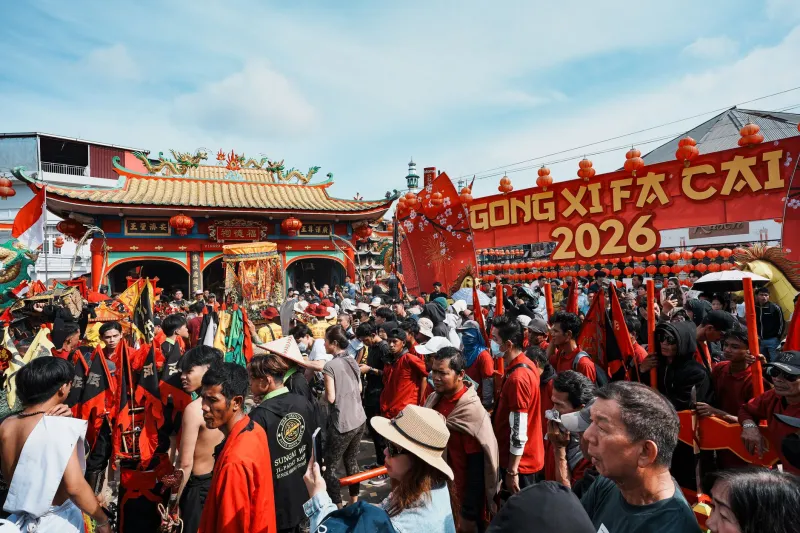
Ask most Americans what they know about Indonesian culture, and you'll probably get one of three answers: Bali, batik, or a vague memory of a geography class. That's not a knock — Indonesia is genuinely one of the least-covered major cultures in American media, despite being home to the fourth-largest population on earth. But here's the thing that even well-meaning coverage tends to miss: "Indonesian" is not one thing. It never was.
For a growing number of Indonesian-Americans, that distinction matters — a lot.
The Problem With the Monolith
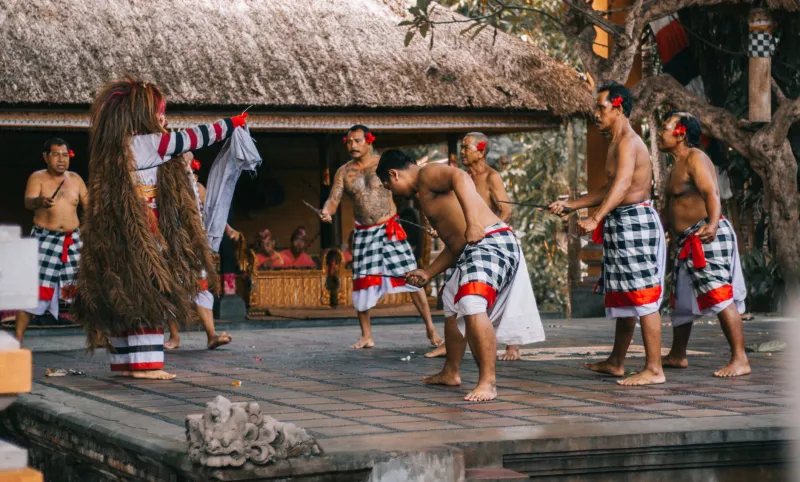
When any diaspora culture gets introduced to a new country, there's a natural flattening effect. The complexity gets sanded down to something more digestible. You see it with Chinese-American food, with Indian-American festivals, with the way "Latin" gets used to describe dozens of distinct national and regional identities. Indonesian-Americans have experienced their own version of this, where the dominant narrative tends to center Javanese or Balinese culture — leaving people from Sulawesi, Kalimantan, Sumatra, or the Madura island off the northeastern coast of Java feeling like they're watching someone else's story get told in their name.
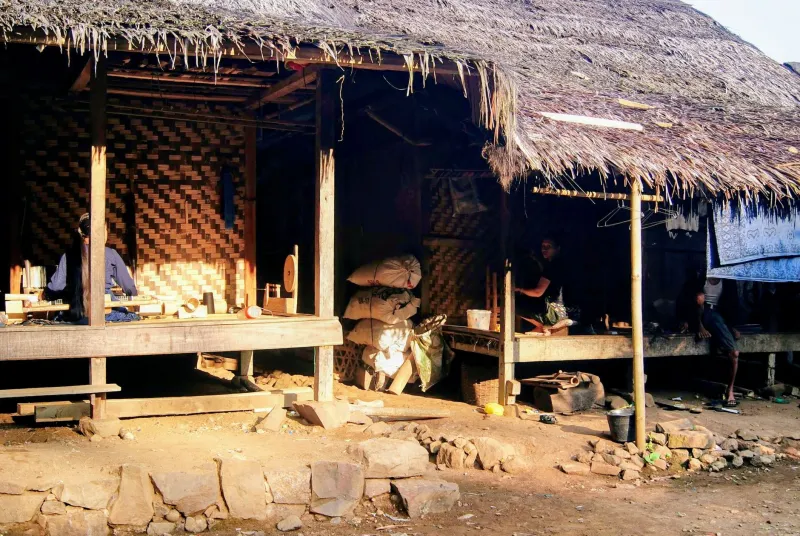
Madura, for instance, is home to Pamekasan — a city that gives this very site its name and its spirit. Madurese culture has its own language (Bahasa Madura), its own culinary traditions (soto Madura, anyone?), its own performing arts, and a distinct regional identity that predates the modern Indonesian nation-state. But in the US, most people — including many within the broader Indonesian-American community — have never heard of it.
That's starting to change.
Micro-Communities With Major Energy
Across American cities, small but fiercely committed regional Indonesian communities are organizing in ways that go well beyond the typical cultural association model. In Portland, a loose network of Madurese families has started hosting what they call kumpulan kampung — neighborhood gatherings that are explicitly about regional identity, not just national pride. They cook dishes you won't find at most Indonesian restaurants. They speak Madurese to their kids. They share music and oral histories that don't circulate in mainstream Indonesian-American spaces.
Similar things are happening in other cities. In Houston, a Makassarese community has been quietly maintaining traditions tied to the Bugis-Makassar seafaring culture of South Sulawesi — including distinct textile practices and a culinary tradition that's nothing like the Javanese-inflected Indonesian food most Americans encounter. In the Bay Area, Minangkabau communities from West Sumatra gather around matrilineal cultural traditions and a cuisine (yes, rendang is Minang, not generically "Indonesian") that they're careful to distinguish from the broader label.
Yogyakarta expats in New York have formed study circles around Javanese philosophy and classical dance — but they're also quick to point out that Javanese culture is itself not monolithic, and that Yogyakarta's kraton traditions are distinct from those of Solo, let alone the rest of the archipelago.
The throughline? People who are done being background characters in someone else's cultural narrative.
Language as Resistance
One of the most striking forms of regional reclamation is linguistic. Indonesia has over 700 living languages, and while Bahasa Indonesia serves as the national lingua franca, regional languages like Madurese, Sundanese, Minangkabau, Batak, and Buginese carry enormous cultural weight. For many Indonesian-Americans, speaking or learning their regional language in the US isn't just nostalgia — it's a political act.
"When I speak Madurese with my cousins here, we're not just communicating," one Portland-based community member explained at a recent cultural event. "We're saying: this exists. We exist. Not just as Indonesians, but as us."
This mirrors broader conversations happening across Asian-American communities — the push to resist the model minority monolith, to insist on specificity, to refuse the idea that cultural survival means cultural simplification. But for Indonesian-Americans, it carries an extra layer of urgency, because even within Asian-American spaces, Indonesians are often an afterthought.
The Food Dimension
If language is the most politically charged form of regional identity, food is the most immediately accessible — and the most delicious. Regional Indonesian cuisines are extraordinarily diverse, and the differences aren't subtle. Madurese cooking is known for its bold use of spices and its distinctive beef and offal dishes. Makassarese food features coto (a rich, spiced offal soup) and konro (beef rib soup) that have almost nothing in common with, say, a Sundanese lalapan spread. Batak cuisine from North Sumatra is heavily pork-based and uses ingredients like andaliman pepper that you won't find in most Indonesian restaurants in the US.
For regional Indonesian-Americans, cooking and sharing these dishes is one of the most direct ways to make their specific identity legible — to other Indonesians, to the broader Asian-American community, and to curious Americans who might not even know what they're missing.
Some are taking it further, hosting pop-ups, selling packaged spice blends, and building social media followings specifically around regional specificity. The pitch isn't "Indonesian food" — it's "this is what people from here eat, and it's not what you think."
What This Means for Asian-American Identity Broadly
The Indonesian regional identity movement is, in some ways, a microcosm of a larger shift happening across Asian-American communities. The old model — unite under a pan-ethnic umbrella, present a unified face, fight for visibility as a bloc — made strategic sense in earlier decades. But a younger generation is increasingly pushing for something more nuanced: visibility and specificity, solidarity without erasure.
For Indonesian-Americans from smaller or less-represented regions, this means insisting that Pamekasan is not Yogyakarta, that Makassar is not Bali, that the diversity within Indonesia is not a footnote but the whole story. And in doing so, they're contributing something genuinely valuable to the ongoing American conversation about what it means to belong — not as a category, but as a community of particular people with particular histories.
It's a harder story to tell than "Indonesian culture is having a moment." But it's a truer one. And honestly? It's a lot more interesting.
Mana Pamekasan is dedicated to exploring the full, unflattened richness of Indonesian culture and its place in American life. Got a regional story to share? We want to hear it.